Adelaide BioMed City
Adelaide BioMed City is the largest health and medical research precinct in the Southern Hemisphere. As a hub for health and life sciences, it co-locates institutions from research, education and clinical care in the heart of Adelaide.
With investment of over $3.8 billion to date, Adelaide BioMed City facilitates the full lifecycle of medical research, from basic discovery, clinical, public health to health services; improving the health of South Australians and citizens all over the world.
Adelaide BioMed City is also conveniently located within a short five-minute walk from the Adelaide Convention Centre (ACC). This proximity allows business events held at the ACC easy access to top clinicians, researchers and physicians.

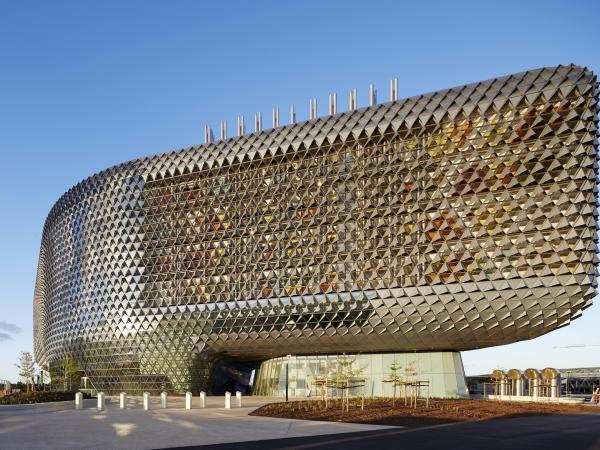
SAHMRI – South Australian Health and Medical Research Institute
SAHMRI is South Australia's flagship not-for-profit health and medical research institute and home to approximately 500 researchers and 175 PhD students. These stakeholders are driven by research excellence to deliver rapid improvements in the prevention, diagnosis, and treatment of disease.
SAHMRI exists to help people lead healthier lives which is achieved through four primary health themes – Aboriginal Health Equity, Women and Kids, Precision Cancer Medicine, and Lifelong Health.
A leading Aboriginal and Torres Strait Islander research unit, the Wardliparingga Aboriginal health research team is focused on achieving equitable outcomes by responding to community priorities, reflecting SAHMRI’s commitment to improving the health and wellbeing of Indigenous communities.
Designed for collaboration, SAHMRI’s landmark building lies at the heart of South Australia’s Biomedical ecosystem, uniting hospitals, universities, and research entities in interdisciplinary partnerships. SAHMRI is also adjacent to Adelaide’s creative, legal and government precincts, inspiring innovation and accelerating the speed to market of discoveries. Cost effectiveness combined with Australia’s R&D tax incentives make SAHMRI a preferred partner for international collaborations.
SAHMRI’s translational impact is profound and growing, including influence of health policies such as laws on vaping, establishing a Centre of Excellence for Registries to house health-advancing data, discovering lifesaving therapies such as a treatment for Chronic Myeloid Leukaemia, and developing the evidence-based Omega-3 ‘test and treat’ program to help prevent preterm births.

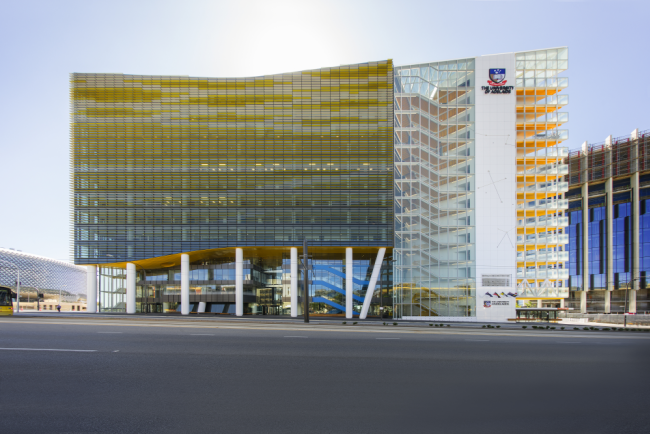
The University of Adelaide Health and Medical Sciences Building
Adelaide’s Health and Medical Sciences Building (AHMS) istransforming the way students learn and preparing future health care leaders for professional practice. This flagship teaching and research facility brings together more than 1,700 students and 600 researchers. Key highlights include:
-
Adelaide Health Simulation – with 24 advanced simulation suites, the most technologically advanced simulation facility in Australasia
-
Adelaide Medical, Dental and Nursing Schools
-
Adelaide Dental Hospital - which provides dentistry students the opportunity to work alongside professional dentistsbased at the clinic
-
Clinical research facility - involved in ground-breaking clinical trials for the development of new medical treatments and interventions.

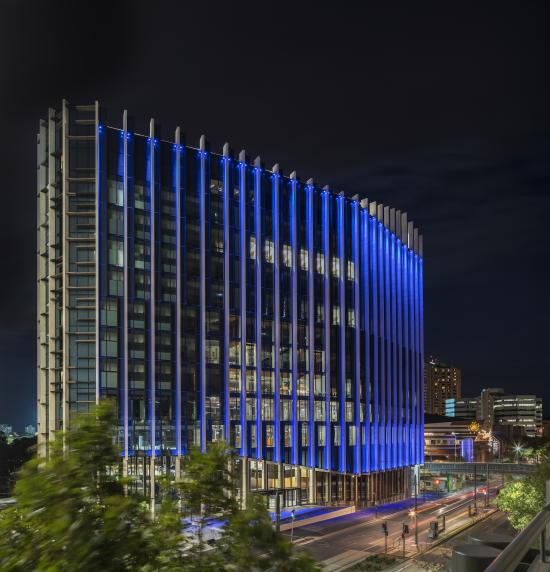
University of South Australia Centre for Cancer Biology (CCB)
The CCB carries out a world-class program of innovative research, making breakthrough discoveries in the fundamental causes of cancer, and translating these discoveries into new ways to prevent and treat this group of diseases.
The CCB is an alliance between SA Pathology and the University of South Australia and boasts the largest concentration of cancer research in the State, currently hosting 22 full-time research group leaders and their teams.
CCB’s primary expertise is in leukaemia, breast cancer, prostate cancer, skin cancer, brain cancer and colon cancer, focussing in the specialised areas of gene regulation, molecular signalling, translational oncology and cancer genomics.
In addition, the Australian Cancer Research Foundation (ACRF) Cancer Genomics Facility provides access to state-of-the-art genomics research equipment, computing technology and bioinformatics expertise to Adelaide BioMed City and the wider research community.

Royal Adelaide Hospital
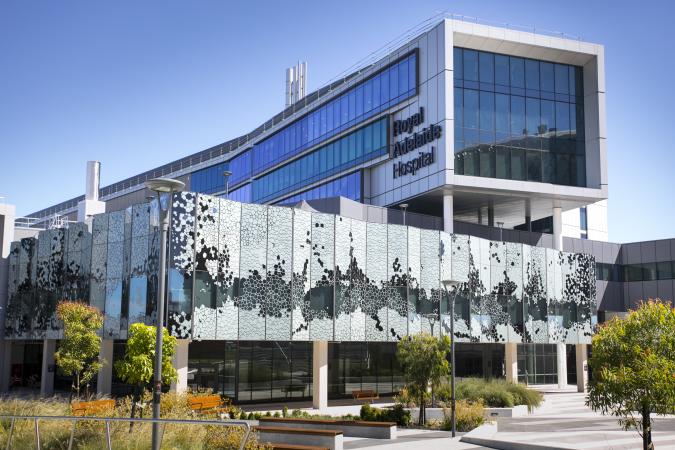
Opened in 2017, The Royal Adelaide Hospital (RAH) is South Australia's flagship hospital, providing complex clinical care to an estimated 85,000 inpatients and 400,000 outpatients annually.
The RAH is Australia’s most technologically advanced hospital with a full range of complex medical, surgical, diagnostic and support services. 100 per cent single overnight patient rooms enable the best possible healing environment with greater levels of privacy, comfort and infection control. Other highlights include:
-
one of the largest Automated Pharmacy Distribution Systems in the nation, incorporating more than 80 automated dispensing cabinets in patient wings to support the accurate and timely distribution of medicines
-
telehealth facilities, enabling staff to consult with colleagues and patients in regional and remote areas across the State and further afield
-
digital imaging technology allowing clinical images to be streamed live from operating theatres and procedural rooms for diagnostic and training purposes
-
the largest automated microbiology system in the Southern Hemisphere, providing world-class technology to support the timely diagnosis and treatment of infectious diseases.
The physical co-location of the RAH, universities and research organisations enables clinical trials and rapid translational research from ‘bench-to-bedside’.
The RAH site also incorporates a total of 3.8 hectares of landscaped environment, including more than 70 internal themed (i.e. Aboriginal and Spinal Garden) courtyards and sky gardens across 9 levels.

New Women’s and Children’s Hospital
The new Women’s and Children’s Hospital (WCH) is currently under construction adjacent to the RAH in the heart of Adelaide BioMed City. The new WCH will provide valuable linkages between health, research, education, training, teaching, clinical care and business developments with a completion date estimated to be 2030-2031.
Co-locating the new WCH next to the RAH will provide infants, children and women direct access to an adult intensive care unit, significantly reducing the risk of transferring maternity and neonatal emergencies. Having adjacent hospitals will also ensure a smoother transition for young patients with long-term conditions from paediatric to adult services, and better person and family centred care facilities and services to enhance the experience for patients and their families. Critical Care functions will also be located over one floor (not multiple floors), with direct access via a lift to the rooftop helipad.
The South Australian Government has committed $3.2 billion to deliver the new WCH. With 414 overnight beds, this hospital will be 25% larger than the current WCH with future capacity to expand.
This new world-class all-electric facility will give South Australian families access to the most advanced hospital care, technology and medical research for decades to come.